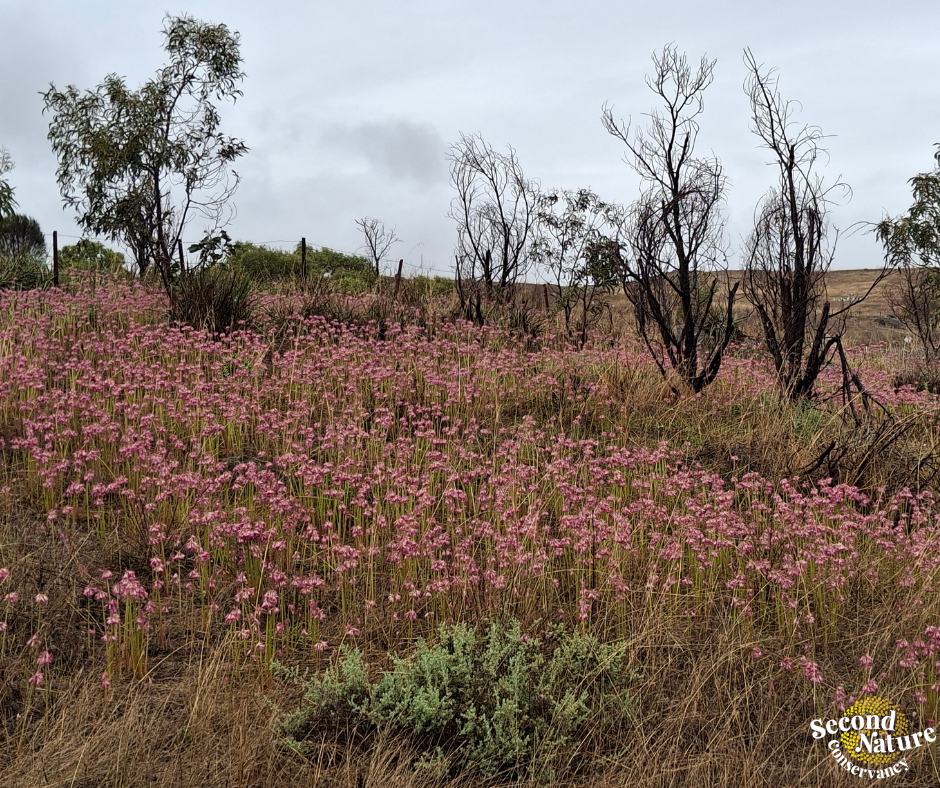
Purple Bells Ring True at Kanmantoo
Activity From the Mulgundawa to Tungkillo Biodiversity Links Project
The eastern hills are lit up with swathes of Purple bells (Calostemma purpurea), also known as Pink garland lily, following the very welcome summer rains over the past month.
This long‑lived, summer‑flowering bulbous perennial is native to grassy woodlands and open grasslands, where it puts on a spectacular display after good rainfall.
One of the most fascinating things about this species is its seeds. They are recalcitrant, meaning they can’t survive drying or cold storage, making long‑term seed banking difficult. Even more remarkable, the seeds lack dormancy and can begin germinating while still attached to the parent plant - a process known as vivipary.
While seeds germinate readily, plants can take three to five years to reach flowering maturity. The flowers attract a range of pollinators, including bees, butterflies, and other insects, highlighting their ecological importance.
Purple bells are closely associated with grassy ecosystems of eastern Australia - habitats that are under significant pressure from overgrazing, herbicide use, urbanisation and development.
These photos were taken at one of our Kanmantoo Grassy Woodland Revegetation Project sites, where weed control and revegetation are helping restore over 160 hectares of grassy woodland and improve more than 7 hectares of Dawesley Creek through bushcare weed control.
Thanks to the Native Vegetation Council (NVC) for their funding support for this project and to the committed landowners who have protected these sites in perpetuity though Heritage Agreement listing.