Kanmantoo Woodland Revegetation Project update
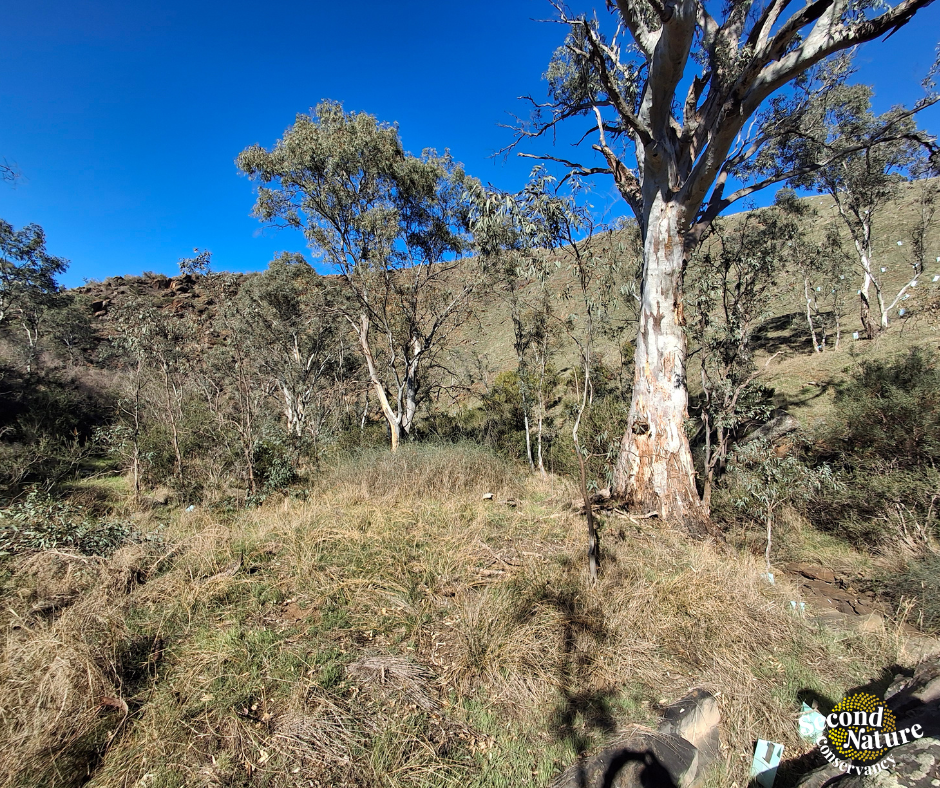
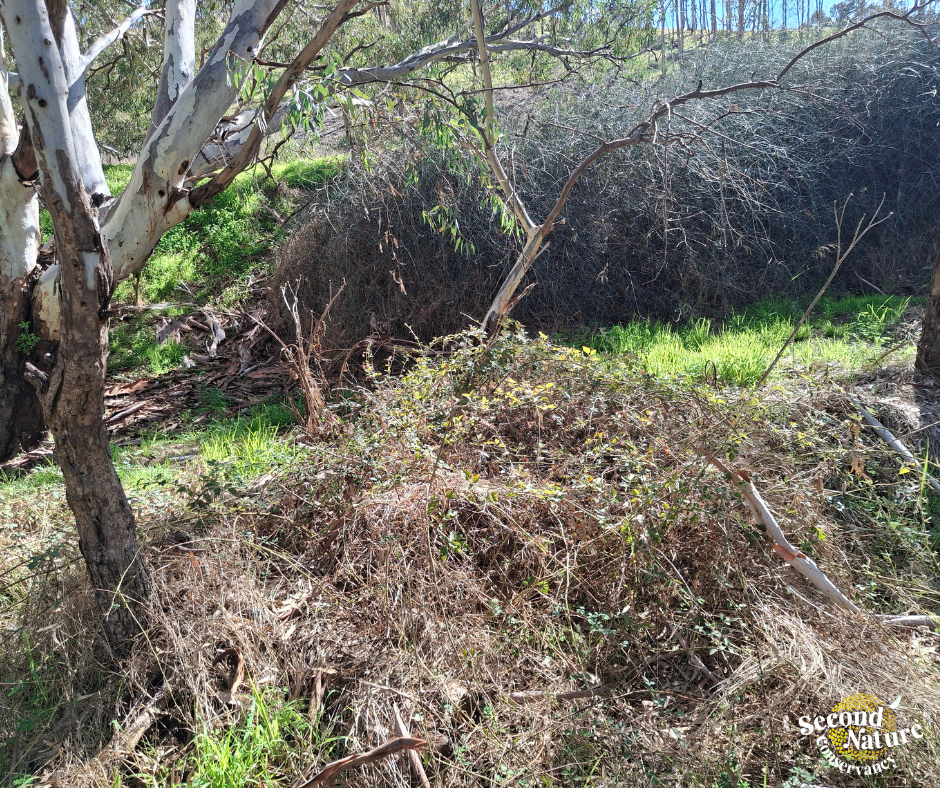
Last month, our Senior Project Officer Ben took a break from the office and joined local contractor Adelaide Flora Management for a walk along Dawesley Creek to evaluate the progress of his bushcare weed control work and the revegetation works our team has been undertaking over the past few years.
From just three years of targeted professional weed control, it was amazing to see the significant progress made on the site.
“This section of the Dawesley Creek holds significant ecological importance, with steep rocky vegetated cliff faces, very rare populations of flora, vulnerable woodland birds, waterholes, ancient Red gums (Eucalyptus camaldulensis) and remnant patches of Scarlet bottlebrush (Callistemon rugulosus); one would be forgiven for thinking you were somewhere in the Flinders Ranges”.
Works along the Dawesley have primarily focused on controlling blackberry, gorse, olives, Watsonia, Perennial veldt grass, Spiny rush and Artichoke thistle. It is fair to say the result from just 3 years of work by Adelaide Flora have been outstanding, with significant amount of natural regeneration and improvement in vegetation dominance and structure noted.
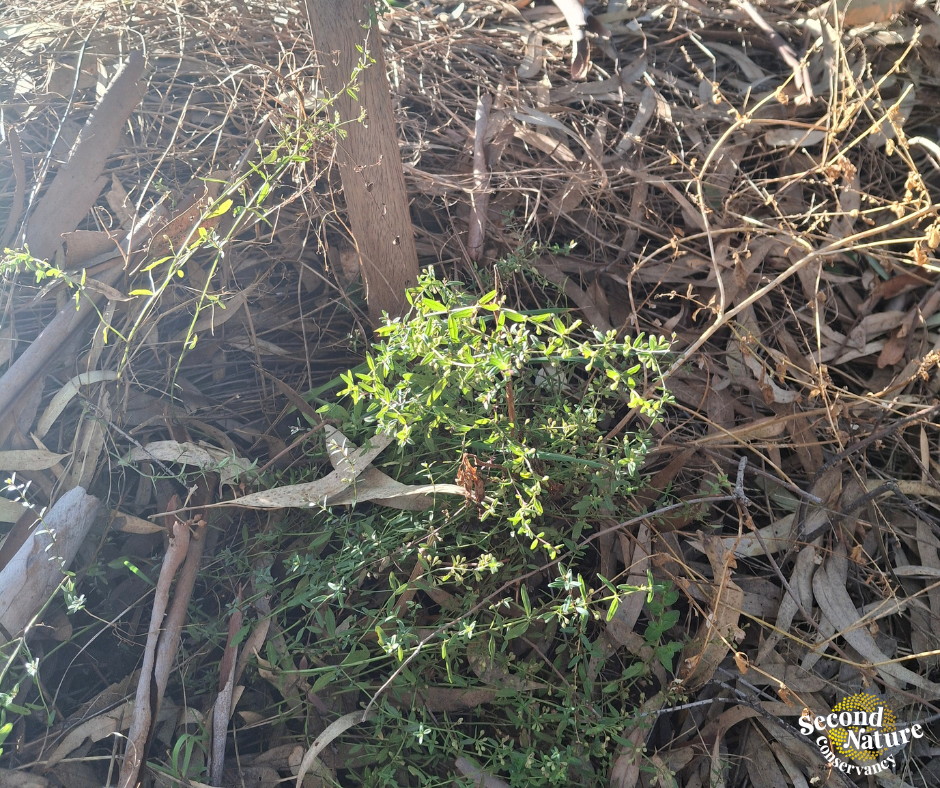
“One of the most exciting outcomes from our revegetation work along the Dawesley creek is the successful establishment of the vulnerable Mentha satureioides (Slender mint) through the planting of more than 50 individual plants, all grown from seed collected from an extremely rare remnant patch of this species situated in Kanmantoo, on a roadside.”
“It means that this plant is protected within these Heritage agreements along the Dawesley creek where it would typically grow and should provide a more secure stronghold of this plant into the future”.
The Kanmantoo woodland revegetation project is working across more than 160 hectares of contiguous land with five landowners to plant more than 60,000 seedlings and undertake significant ecological restoration works. All sites are now listed as Heritage agreements which protects the sites in perpetuity.
Funding and support for this project is provided by the Native Vegetation Council through the Hills and Fleurieu revegetation grants round.